Artem Zernov
RU EN
Let's meet

We can change not only the world around us, but also the way we see it

By developing ourselves, our technologies and the ways we interact, we can create the conditions for a freer, longer, more conscious and better life — our own and others'. This isn't a guarantee but a picture I explore and create together with others.

Five pillars

These five ideas make up my vision of the future. They don't reduce to a single doctrine, but they reinforce each other: each makes the others more possible.

I

Humans extended by technology

Technology stops being an external tool and becomes an extension of the person. Not a replacement for the mind but an amplifier: memory that doesn't lose things, a conversation partner who helps you think, a body that stays young longer.

  1. CloserSystems understand voice, gestures and intent, help invent and structure knowledge.
  2. FurtherRejuvenation biotechnology, expanding the capabilities of the body and brain.
  3. Far offNeural interfaces: the environment responds to thought, and the line between mind and tool disappears.

A leaf skeleton against the light: a living network of veins
II

The conscious human

Reactions that don't have to remain the basis of relationships: aggression dominance seizing what's not yours

I don't believe humans are locked in their instincts forever. Aggression, the drive to dominate and to seize what belongs to others are mechanisms that can be noticed, examined and replaced. People can see their own reactions, change their habits and choose how to respond. Hence my interest in the nature of mind and practices of self-regulation.

III
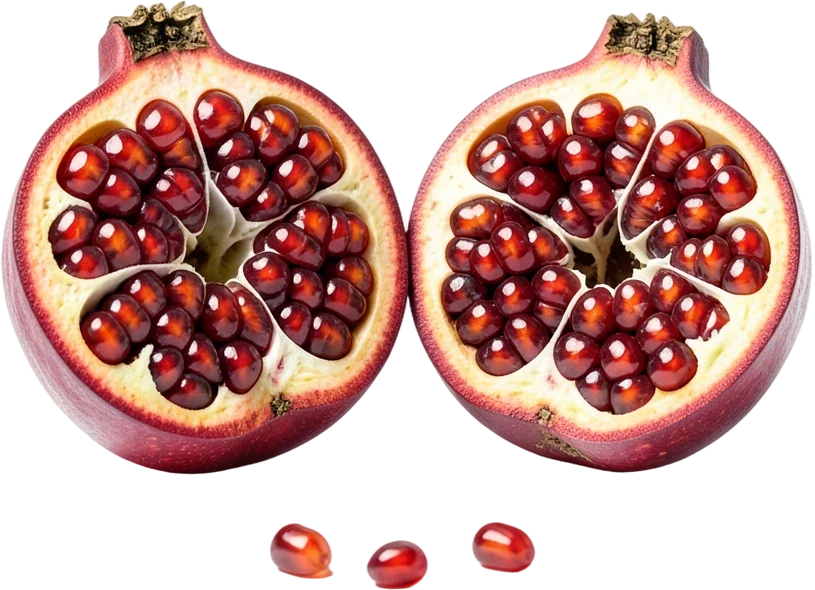
A split pomegranate full of seeds

A resourceful environment and abundance

People spend a disproportionate amount of energy on basic needs. I want decent living conditions to be available to everyone — not because everyone has to become the same, but because technology and cooperation already make it possible. Then people have time to explore, learn and create.

  • Automated production
  • Accessible infrastructure
  • Shared use of resources
  • High unconditional basic income
IV

Cooperation instead of struggle

I'm interested in systems where mutual aid isn't a heroic act but the most natural and rewarding way to live. Not remaking states, but gathering people who think alike and know how to reach agreements themselves.

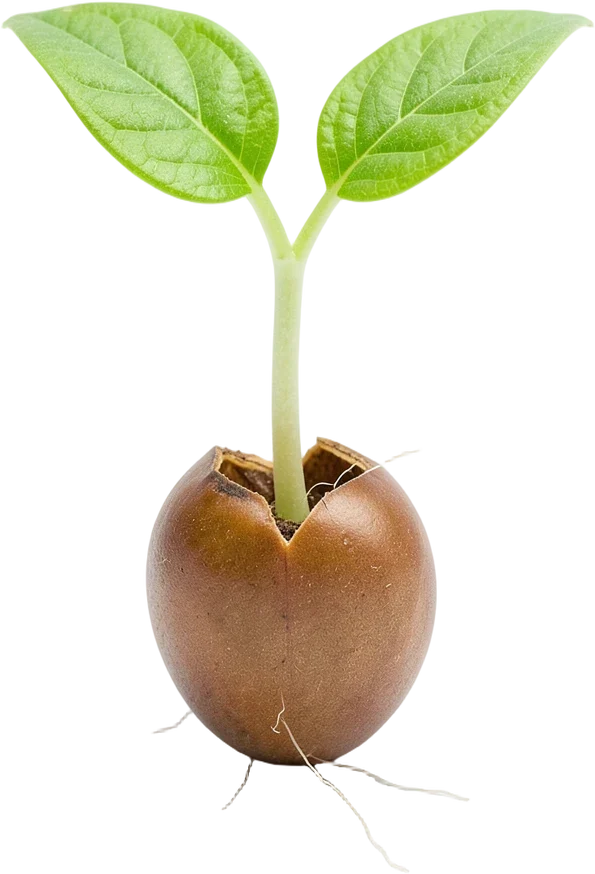
Scattered seeds in an even pattern with no center
  • Voluntary self-organization
  • Effective communication
  • Exchanging value without barriers
  • Education and research
  • Meeting needs together
  • New forms of coordination
V

Creation as a freed-up possibility

Technology, awareness and a resourceful environment reinforce each other. Together they free up the energy that today goes into survival and struggle — and that energy can be directed toward what a person truly wants to create.

Technology awareness a resourceful environment creation

Can I be well if those near me are not?

Four principles

Everything else rests on them: my interest in longevity, in AI and in new forms of society. Not rules for others, but the way I myself look at the world.

  1. I am not my model of the world

    My beliefs, habitual reactions and ways of behaving were shaped by biology, upbringing, experience and surroundings. They feel natural, but they are not my unchangeable essence.

    I can look at them from the outside: observe how they work and revise what no longer works. That's why I try not to make my beliefs part of my identity — then they aren't frightening to change.

  2. My thinking can be developed and rebuilt

    The brain is plastic. Books, conversations, learning, technology and the people around me gradually change the way I think — if I don't cling to the old for its own sake. I deliberately choose an environment that influences me this way.

    An honest caveat: not every belief changes by intention alone, and not every limitation is removed by rethinking. But much of what seems inevitable turns out to be habit.

  3. Growth makes sense when it leads to flourishing

    Becoming more efficient, smarter or richer isn't enough for me. What matters is where those capabilities are directed. I'm drawn to growth that brings more freedom, health, vitality and creativity — and at the same time creates opportunities for others.

  4. Abundance is never just personal

    If I'm doing well while those around me suffer, that isn't abundance but a flawed design. I don't exist in isolation: my possibilities depend on my environment, my relationships and the state of society.

    So caring about other people's well-being isn't an add-on to my personal goals but part of my very idea of a good life. Compassion here isn't a moral but a working tool for shared flourishing.

From far to near

Not a forecast, but the direction I want to move in

50–100 years

External systems become an extension of the mind: you think you'd like the lights dimmer, and they dim. The body stays young. Aggression, dominance and seizing what belongs to others fade into the past as vestiges, because no one faces the scarcity that triggers them.

Closer

Rejuvenation biotechnology. Digital systems and neural networks gradually blur the line between the mind and external tools. Communities of like-minded people live and work near each other and provide for one another.

Now

Systems understand voice and gestures in real time, help invent things and present information in a way a person with limited attention can take in. Something like Jarvis, only real.

I'm already doing part of this: the imhuman.space knowledge base on aging and a team of AI agents that builds websites. What I Build

Can you change the person you were given?

Two worldviews

A thought experiment. You don't have to agree with anything: just compare where each of the two worldviews leads in 50 years.

Aggression, fear and the fight for resources are a permanent part of human nature. They can be restrained, but not changed.

Society in 50 years

Order rests on restraint: laws, surveillance, punishment. The more powerful the tools, the more effort goes into controlling them. Rules multiply because trust doesn't grow.

Technology

It grows more powerful but serves the same instincts: protect what's yours, get ahead of rivals, hold on to other people's attention. AI mainly guards, watches and sells.

Relationships

Another person is first of all a competitor. Closeness is possible in a narrow circle; beyond it, caution and calculation. Scarcity is reproduced even where resources are already sufficient.

Humans are rational beings who can change themselves and their environment while understanding the consequences.

Society in 50 years

Rules are made and revised by those they affect. Basic needs are met for everyone, so there are fewer reasons to seize and less need for surveillance.

Technology

It becomes an extension of the mind: helping people understand themselves, learn and think through the consequences of decisions. AI is a conversation partner who sees further than one person can.

Relationships

Another person is first of all a potential partner and co-creator. Cooperating pays off more than fighting, and people can notice in themselves the reactions that used to control them.

Both worldviews are assumptions. But AI already helps think through the consequences of decisions better than a person can alone, and comparing them today is easier than ever. Which worldview to choose is up to you. More about the thought experiment

Three levels of intent

  1. Worldview

    A coherent picture of what humans, consciousness, technology and society are capable of. At its core: growth, longer life, freedom of thought and cooperation.

  2. Bringing people together

    Finding those who share this picture, helping them see common interests and strengthen each other. It doesn't matter what you do for a living; what matters is how you relate to your own thinking.

  3. Creating an environment

    Joint projects, learning, sharing knowledge and resources, a shared place to live. An environment in which people keep growing faster than they would alone.

The levels are connected: the worldview helps people find their own kind, people combine their capabilities, and the shared environment helps them keep growing.

Five directions

Each direction stands on its own and grows from the same idea. You can start with any of them — the links will lead you to the rest.

If this sounds like the way you think

You don't have to join anything. We can just meet and see what comes of it.

Let's meet